AI Training
How AI Is Transforming the German Job Market?
6/5/2026
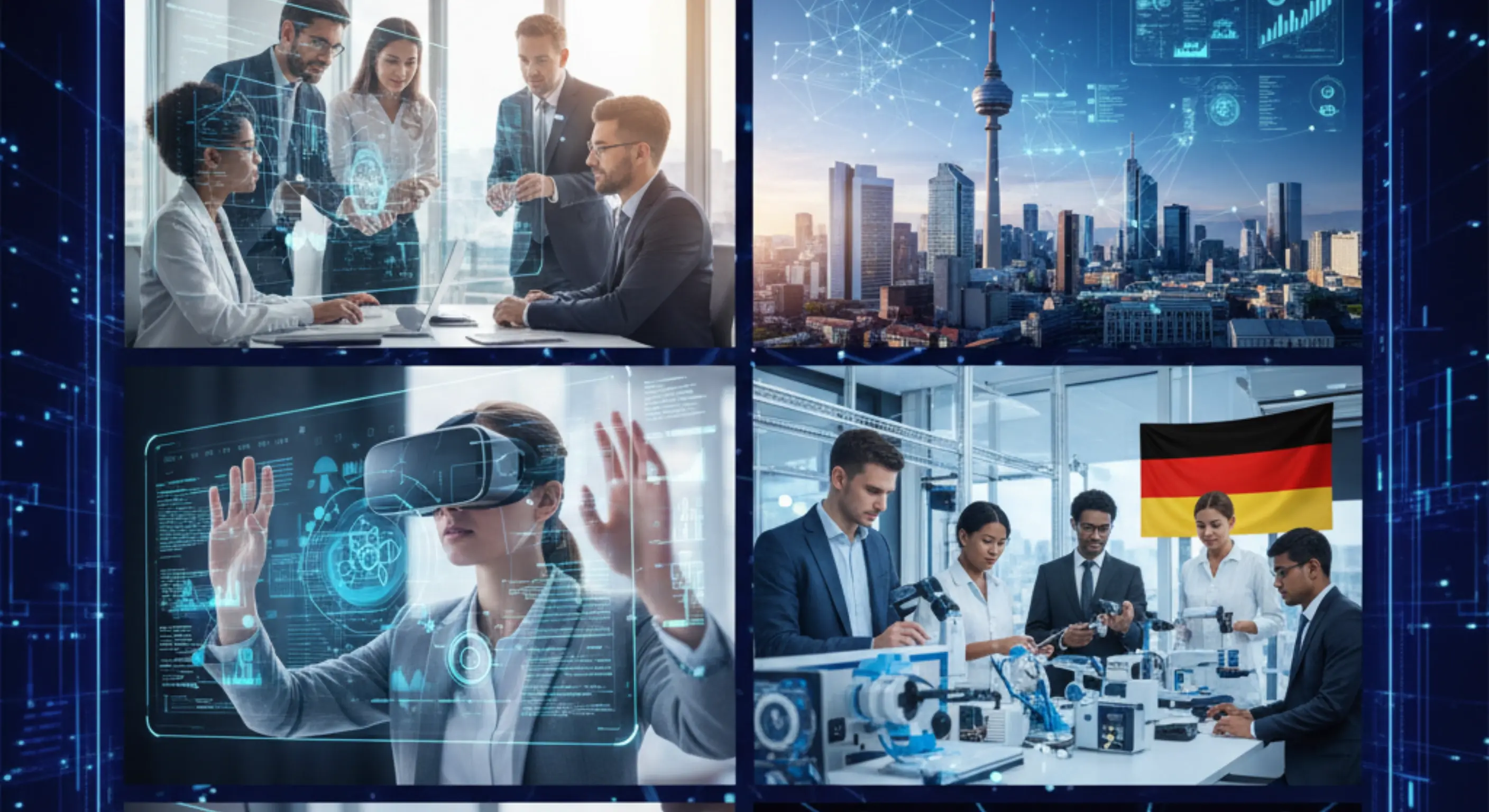
Artificial Intelligence (AI) is no longer a futuristic concept — it’s a driving force reshaping the global economy. In Germany, one of Europe’s top innovation hubs, the AI job market has grown rapidly over the past few years. As the government pushes its “AI Made in Germany” strategy, the demand for skilled AI professionals continues to soar.
By 2026, the AI job market in Germany is expected to reach new heights, with companies in Berlin, Munich, Frankfurt, and Stuttgart actively competing for top AI talent. From manufacturing and healthcare to automotive and finance, AI is transforming every major sector. For professionals who want to stay ahead of the curve, now is the time to develop the right skills and certifications.
Germany is home to some of Europe’s fastest-growing AI ecosystems. Tech giants like Siemens, Bosch, SAP, and BMW, alongside innovative startups in Berlin, are leading the charge in AI adoption. According to recent studies, AI-related positions in Germany have increased by over 35% annually since 2023.
The AI job market in Germany is thriving in key industries such as:
As digital transformation accelerates, AI specialists, data scientists, and machine learning engineers are becoming some of the most sought-after professionals in the German workforce.
The future of AI employment in Germany looks extremely promising. Experts predict that by 2026, AI will contribute over €80 billion to the German economy and create tens of thousands of new job opportunities.
Emerging fields such as generative AI, robotic process automation (RPA), and AI-driven analytics will require a workforce skilled not just in coding, but also in data interpretation, model optimization, and AI ethics.
Germany’s commitment to innovation and its focus on digital transformation ensures that the AI job market in Germany will remain a powerful career avenue for the next decade.
To succeed in the evolving AI landscape, professionals must develop advanced technical expertise. The most in-demand AI skills in Germany for 2026 include:
These skills form the foundation of most AI applications and are essential for roles like AI engineers, data scientists, and AI researchers.
Equally important are non-technical abilities such as:
For professionals eager to grow, continuous learning is essential. Institutions like TSA Bildungsakademie Berlin offer specialized AI Training in Berlin, helping learners master these skills through hands-on, industry-relevant programs.
Additionally, courses like AI for Managers and AI Sales Training Berlin are becoming vital for business leaders and sales professionals who want to leverage AI tools for strategic decision-making and customer engagement.
The AI job market in Germany is diverse and rapidly expanding. Key roles expected to dominate the landscape by 2026 include:
As AI integration deepens across industries, demand for AI professionals in Germany will continue to rise.
Germany’s tech-friendly cities are becoming AI talent magnets:
Top employers in the AI job market in Germany include SAP, Deutsche Telekom, Bosch, BMW, Zalando, and Aleph Alpha, a leading AI research company.
Salaries in the AI job market in Germany are among the most competitive in Europe.
With AI becoming central to business strategy, professionals who invest in TSA Weiterbildung (professional education) are likely to enjoy long-term career growth and leadership opportunities.
If you’re looking to break into the AI job market in Germany, follow these essential steps:
While the AI job market in Germany offers enormous opportunities, it also presents challenges. Automation may replace certain repetitive jobs, but it’s creating far more opportunities in data-driven and creative roles.
Ethical AI, data privacy, and responsible innovation will become major focus areas. Professionals who understand both the technical and ethical dimensions of AI will have a strong advantage.
By 2026, AI will no longer be a niche - it will be part of every business operation. From AI-powered digital marketing to intelligent manufacturing, Germany’s economy is poised for an AI-driven revolution.
The AI job market in Germany is growing faster than ever, opening the door to high-paying, future-proof careers. Whether you’re a student, tech professional, or manager, developing the right AI skills now is the smartest move for long-term success.
At TSA Bildungsakademie Berlin, we’re committed to helping learners prepare for the future with programs like AI Training Berlin, AI Sales Training Berlin, and AI for Managers. Our TSA Weiterbildung programs are designed to equip you with the knowledge and hands-on experience German employers are seeking for 2026 and beyond.
Start your AI career today - the future of work in Germany is intelligent, innovative, and powered by AI.
Our expert team at TSA is dedicated to providing valuable insights and practical guidance for your professional development journey. We combine years of industry experience with the latest educational trends to bring you content that matters.