AI Training
AI Training & Certification: Complete Career Guide
5/12/2026
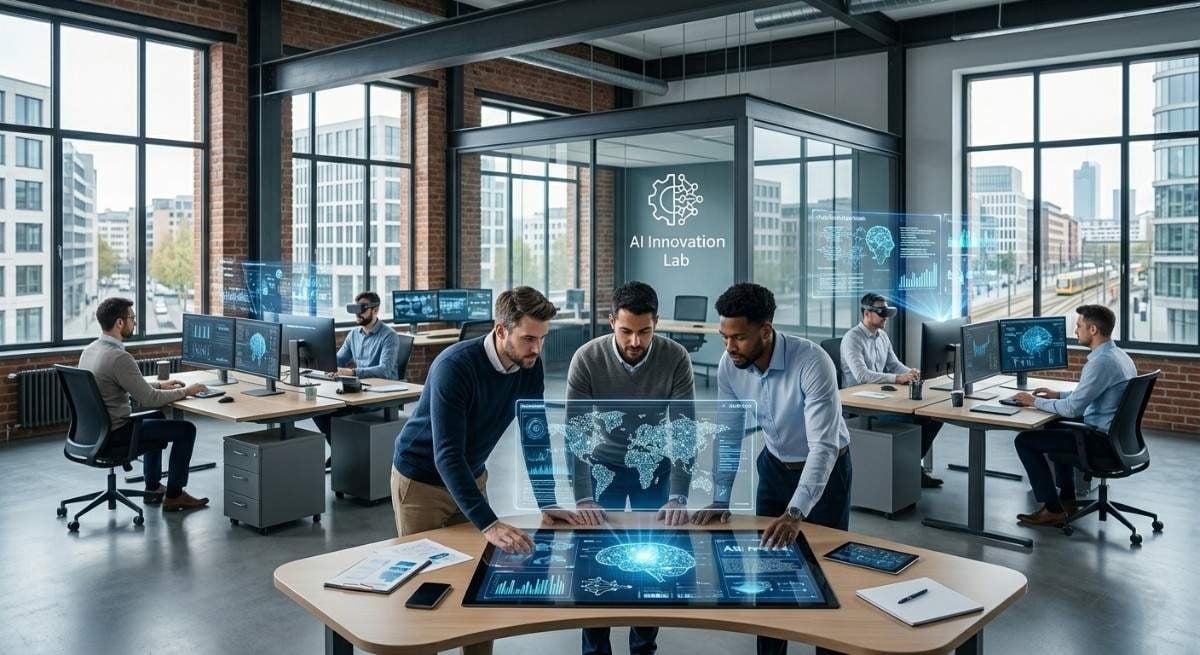
Artificial Intelligence is no longer a futuristic concept in Germany. It is already changing how companies operate, hire employees, and improve productivity across different industries. From logistics and healthcare to automotive manufacturing and customer service, AI technologies are creating new opportunities while also changing traditional job roles. As businesses continue to digitize their operations, professionals with modern technical skills are becoming increasingly valuable in the workforce.
Germany, known for its strong industrial economy and innovation-driven companies, is rapidly embracing AI solutions. This transformation is not only affecting large corporations but also small and medium-sized businesses that want to remain competitive in a digital economy.
Germany has become one of Europe’s leading countries in adopting AI technologies. Businesses are investing heavily in automation, data analysis, robotics, and machine learning systems to improve efficiency and reduce operational costs. This has created a growing demand for skilled workers who understand modern digital technologies.
The rise of the AI Job Market in Germany is opening career opportunities for software developers, data analysts, cybersecurity specialists, AI consultants, and automation experts. Companies are searching for employees who can combine technical expertise with problem-solving abilities.
At the same time, traditional job profiles are evolving. Employees are now expected to work alongside intelligent systems and digital tools. Workers who continuously improve their skills will have better chances of securing stable and future-oriented careers.
Artificial Intelligence is influencing almost every sector in Germany. However, some industries are experiencing particularly rapid transformation.
Germany’s automotive sector is using AI for autonomous driving systems, predictive maintenance, quality control, and smart manufacturing. AI-powered robots can now detect production errors more efficiently than traditional systems.
Logistics companies are implementing AI to optimize delivery routes, warehouse management, and supply chain operations. Smart systems help businesses reduce delays and improve customer satisfaction.
Hospitals and healthcare providers are using AI for diagnostics, patient monitoring, and medical data analysis. AI-supported systems help doctors make faster and more accurate decisions.
Banks in Germany are using AI to detect fraud, automate customer support, and analyze financial risks. Digital banking platforms are also improving customer experiences through intelligent automation.
Educational institutions are integrating AI into learning platforms and online training systems. Personalized learning experiences are becoming more common, helping students learn more efficiently.
Although some traditional jobs are changing, AI is also creating many new career paths. Companies now need professionals who can manage and improve intelligent systems.
Some emerging AI-related roles include:
AI Specialists
Data Scientists
Machine Learning Engineers
Robotics Technicians
Cybersecurity Experts
Digital Transformation Consultants
Cloud Computing Specialists
Automation Engineers
These positions often offer strong career growth and competitive salaries. Professionals with digital skills are increasingly valued in both private companies and public organizations.
As technology evolves, continuous education has become essential for long-term career success. Employees who upgrade their skills can adapt more easily to changing workplace requirements.
Many German employers now prioritize candidates who demonstrate adaptability, technical knowledge, and digital competence. Learning new technologies not only improves employability but also increases confidence in a rapidly changing professional environment.
Professional education centers and training academies play an important role in helping workers prepare for future careers. Practical learning programs help students gain industry-relevant knowledge and hands-on experience.
Modern companies require employees who understand both technology and practical workplace applications. This is why specialized education programs are becoming increasingly important in Germany.
Participating in Artificial Intelligence Training can help professionals understand AI tools, automation systems, data processing, and digital business solutions. These programs are beneficial for students, working professionals, and individuals planning career transitions into technology-focused industries.
Training programs also help learners develop important soft skills such as critical thinking, communication, and analytical problem-solving, which remain highly valuable even in an automated environment.
While AI offers many advantages, it also presents certain challenges for businesses and employees.
Many organizations struggle to find workers with advanced digital knowledge. This shortage creates pressure on companies to invest in employee training and development.
Employees may need time to adapt to new technologies and automated systems. Companies must provide proper support and learning opportunities during this transition.
AI systems rely heavily on data collection and analysis. Businesses must ensure strong cybersecurity measures and ethical use of customer information.
Some repetitive tasks may become automated, changing the nature of existing jobs. However, human creativity, leadership, and emotional intelligence will continue to remain essential.
Germany is actively investing in digital infrastructure, research programs, and technology education to remain competitive in the global market. Government initiatives and private organizations are supporting innovation and workforce development.
Universities, technical institutes, and vocational academies are introducing more technology-oriented programs to prepare students for future careers. Businesses are also collaborating with educational institutions to bridge the gap between academic learning and industry needs.
The focus is no longer only on academic qualifications but also on practical digital skills that can be applied in real workplace situations.
Despite rapid technological advancements, AI cannot completely replace human abilities. Creativity, empathy, leadership, and interpersonal communication are qualities that remain uniquely human.
Successful companies understand that AI works best when combined with skilled professionals who can make informed decisions and build strong customer relationships. Instead of replacing people entirely, AI is helping employees work more efficiently and focus on higher-value tasks.
Professionals who embrace lifelong learning and remain open to innovation will be better prepared for future career opportunities.
Artificial Intelligence is transforming the German job market at an impressive pace. Businesses across multiple industries are using AI technologies to improve productivity, streamline operations, and stay competitive in the digital age. While some traditional roles are evolving, new opportunities are emerging for professionals with modern technical skills and adaptability.
For students, job seekers, and working professionals, continuous education has become more important than ever. Developing digital expertise and understanding AI technologies can significantly improve career prospects in Germany’s evolving employment landscape.
Educational institutions like TSA Bildungsakademie continue to support learners by providing practical and career-oriented training programs designed for the future workforce. With the right knowledge and professional development, individuals can confidently adapt to the changing demands of an AI-driven economy.
Our expert team at TSA is dedicated to providing valuable insights and practical guidance for your professional development journey. We combine years of industry experience with the latest educational trends to bring you content that matters.