

Care & Support
Home Care vs Nursing Home Careers: Which Path Is Right for You?
8/20/2026
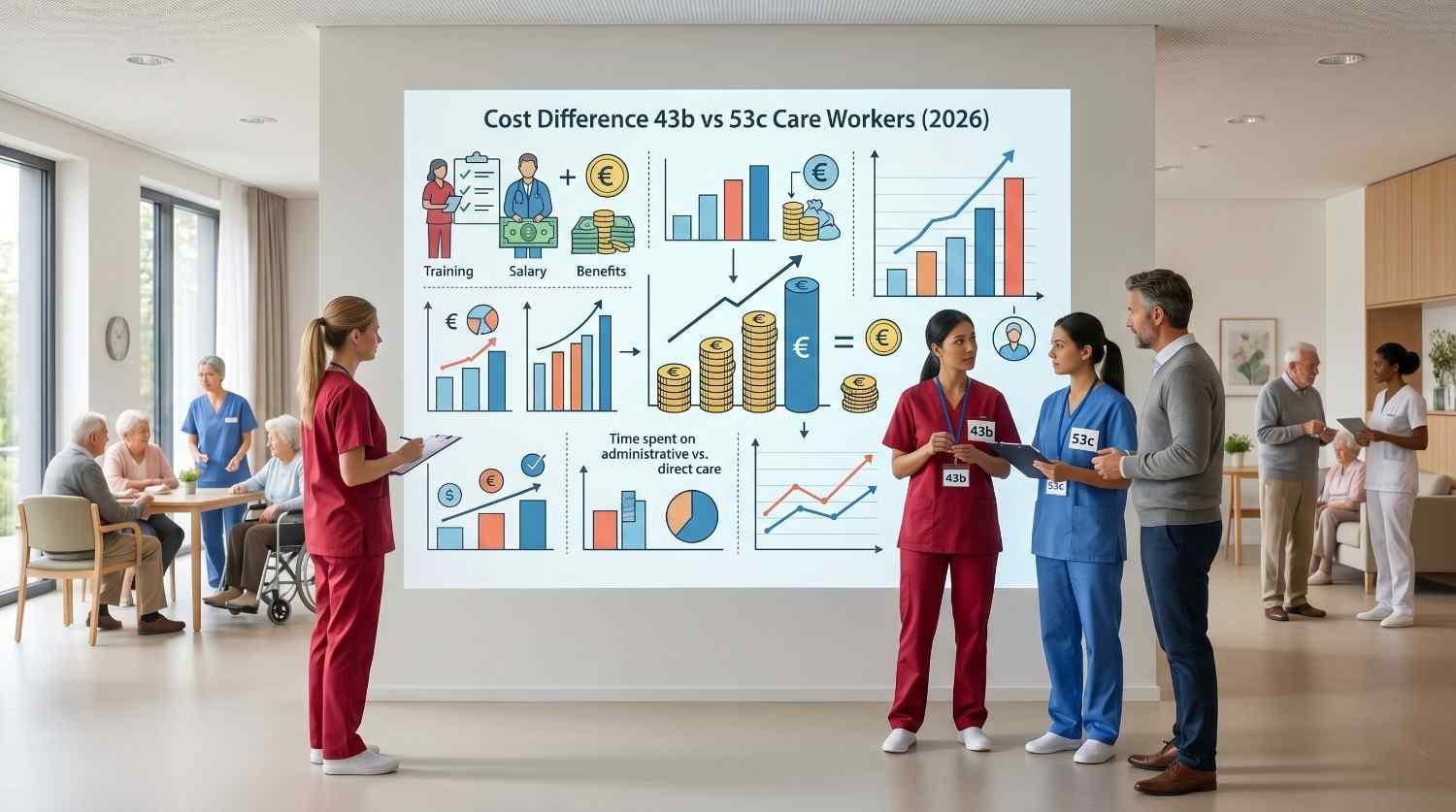
Understanding the cost difference between 43b and 53c care workers is essential for anyone involved in Germany’s elderly care sector. Whether you are a healthcare provider, a nursing home manager, or a family seeking professional support, knowing how these roles differ in cost and value can help you make better decisions.
In this guide, we break down everything you need to know about Sections 43b and 53c care workers, including their roles, qualifications, and the real cost implications in 2026.
Section 43b care workers, often referred to as Betreuungskräfte, are trained professionals who provide emotional and social support to elderly individuals in care facilities.
Their primary responsibilities include:
Assisting with daily activities
Organising recreational programs
Offering companionship and emotional support
These caregivers play a vital role in improving the quality of life for seniors, especially those in nursing homes. However, they do not perform medical tasks, which keeps their training requirements and costs relatively lower.
Section 53c care workers represent an updated framework within the German care system. While closely related to 43b roles, 53c caregivers often have enhanced responsibilities and more structured training requirements.
Key aspects include:
Broader scope of caregiving support
Updated legal recognition under German regulations
More standardised training programs
As the healthcare sector evolves, 53c care workers are becoming increasingly important, especially in facilities that require higher standards of care and compliance.
The main difference lies in how these roles are defined within German law. While 43b care workers were introduced earlier, 53c reflects updated regulations aimed at standardising caregiving practices.
43b caregivers focus primarily on social engagement, while 53c caregivers may take on additional structured responsibilities within care settings.
Training requirements for 53c roles are often more comprehensive. Many professionals now pursue a 43b 53b online course in Germany to upgrade their qualifications and stay competitive in the job market.
The cost difference between 43b vs 53c care workers depends on several factors, including salary, training, and employer expenses.
43b care workers typically earn lower salaries compared to 53c caregivers. This is mainly due to:
Less intensive training
Limited scope of responsibilities
On the other hand, 53c caregivers often command higher wages because of their enhanced qualifications and broader roles.
Employers must consider additional expenses beyond salaries, such as:
Social security contributions
Insurance coverage
Ongoing training and certification
Hiring a 53c care worker may involve higher upfront costs, but it can also lead to improved care quality and compliance.
For nursing homes and care facilities, staffing decisions directly affect budgets. While 43b workers are more cost-effective in the short term, 53c workers can provide better long-term value due to their versatility.
Several variables influence the cost difference between 43b and 53c care workers:
Higher qualifications generally lead to higher salaries and training costs.
Experienced caregivers demand better pay, regardless of their classification.
Costs can vary significantly across different regions in Germany.
Private institutions may offer higher salaries compared to public facilities.
With increasing demand for elderly care, wages for skilled caregivers are rising.
Choosing between 43b and 53c care workers depends on your specific needs.
53c caregivers may be more cost-effective in the long run due to their broader skill set and compliance with updated regulations.
43b caregivers can be a more affordable option for non-medical support and companionship.
While 43b workers offer lower initial costs, 53c workers provide greater flexibility and long-term benefits.
Hiring trained and certified caregivers offers several advantages:
Improved quality of care
Better compliance with legal standards
Increased trust from patients and families
Reduced risk of legal complications
Investing in qualified professionals ensures both safety and satisfaction.
The demand for skilled caregivers continues to grow in Germany. Many individuals are now enrolling in programs such as Further Education in Berlin to enhance their skills and career prospects.
Professional training programs help caregivers:
Gain recognised certifications
Improve job opportunities
Increase earning potential
For those entering the field or upgrading their qualifications, enrolling in a 43b 53b online course in Germany is a practical and flexible option.
When evaluating the cost difference between 43b vs 53c care workers, avoid these common mistakes:
Focusing only on salary instead of total cost
Ignoring training and certification requirements
Overlooking long-term value
Hiring unqualified staff
Making informed decisions ensures better outcomes for both caregivers and patients.
The cost difference between 43b vs 53c care workers is influenced by multiple factors, including qualifications, responsibilities, and market demand. While 43b caregivers are more affordable, 53c caregivers offer greater value through enhanced skills and compliance with modern standards.
For employers and families alike, the key is to balance cost with quality. Investing in well-trained professionals not only improves care outcomes but also ensures long-term efficiency.
As Germany’s healthcare system continues to evolve, understanding these differences will help you make smarter, future-ready decisions.
Our expert team at TSA is dedicated to providing valuable insights and practical guidance for your professional development journey. We combine years of industry experience with the latest educational trends to bring you content that matters.